Scientists develop ultra‑robust machine‑learning models capable of stable molecular simulations at extreme temperatures
Researchers at ºÚÁÏÍø³Ô¹Ï±¬ÁÏ have created a groundbreaking physics‑informed machine‑learning model that can run molecular simulations for unprecedented lengths of time, even at temperatures as high as 1000 Kelvin.
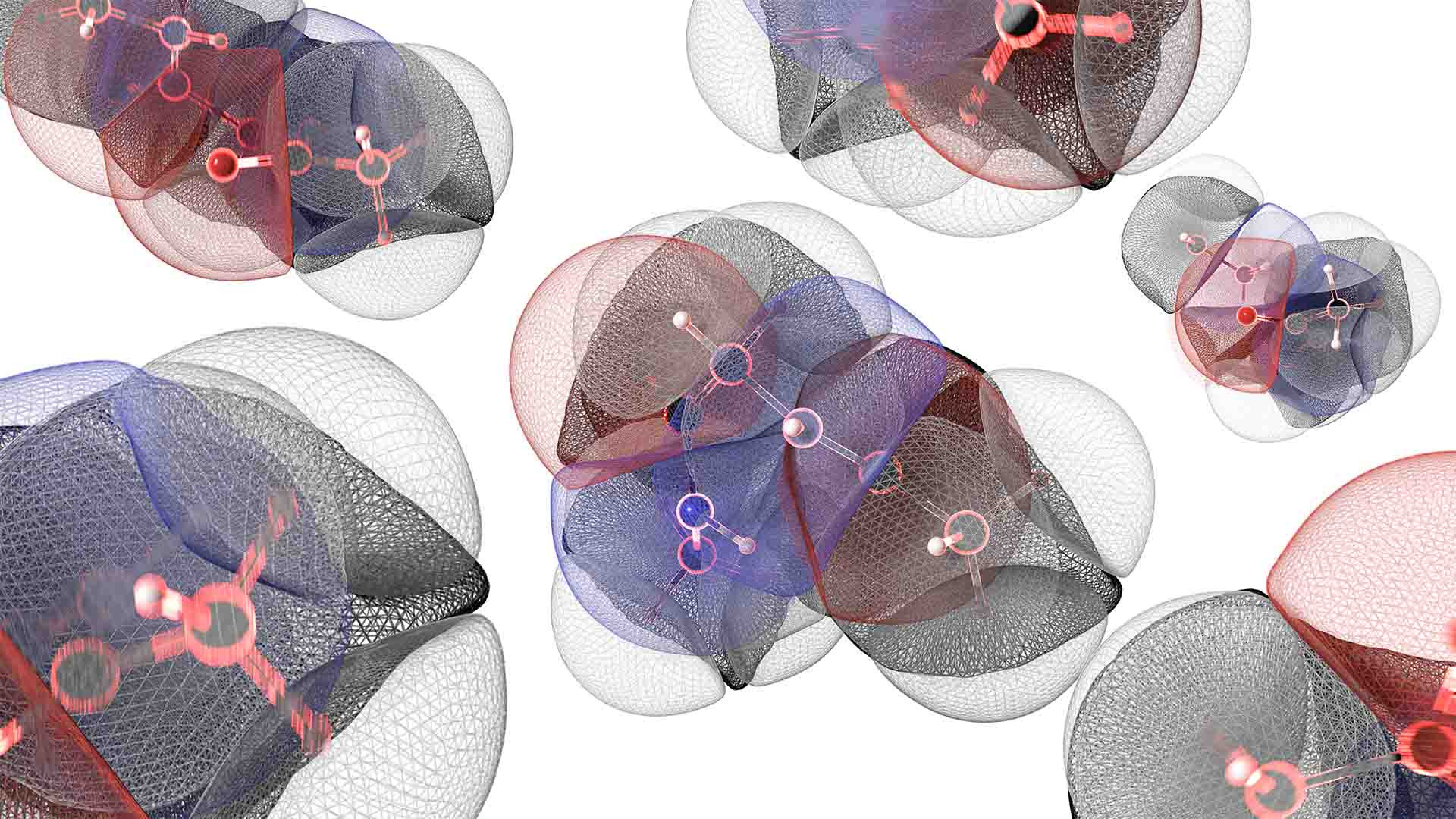
This research was published in Communications Chemistry.
Unprecedented robustness of physics informed atomic energy models at and beyond room temperature
- DOI:
- URL:
The study, published in Communications Chemistry, explores the first AI‑powered model that can keep molecular simulations running safely and smoothly, even when molecules are pushed to extreme conditions. In simple terms, this model stops molecules from “breaking apart� inside the simulation, allowing researchers to study how they behave over long periods and at very high temperatures. This stability opens the door to more reliable discoveries in areas like drug development, new materials and sustainable chemistry, all without relying on expensive supercomputers.
Building more reliable AI molecular models
Machine‑learned potentials (MLPs) are widely used to approximate quantum mechanical behaviour in molecules, but most existing models become unstable when molecules experience heat, movement or structural distortion. This makes long, reliable simulations extremely difficult to achieve.
The ºÚÁÏÍø³Ô¹Ï±¬ÁÏ team – Bienfait Kabuyaya Isamura, Olivia Aten, Mohamadhosein Nosratjoo and – has solved this long‑standing challenge by integrating deep physical knowledge directly into their model.
The researchers built a new AI model using Gaussian process regression, to understand how atoms in a molecule naturally behave. To do this, they fed the model detailed information about how atoms interact in real life, based on the rules of quantum physics, to help the AI make more realistic predictions about how each part of a molecule should move.
They also discovered that a small mathematical choice, called the “prior mean function�, affected the stability of the model; with this function in place, the AI had the correct “starting point� to create and sustain a stable model even when a molecule is stretched, heated or shaken.
For years, the community has focused on accuracy benchmarks, but we’ve shown that the real test is whether a model can survive the unpredictable situations molecules encounter during simulation. Our models don’t just survive, they actively correct unphysical behaviour.
A smarter way to keep molecules from breaking down
Unlike conventional approaches, the new model uses real-world physical principles to prevent atoms from collapsing together or flying apart when the molecule enters high‑energy states. This enables reliable simulations even far beyond room temperature.
The team demonstrated the model’s robustness with 50 independent simulations, each lasting 10 nanoseconds, totalling 0.5 microseconds of stable dynamics, a milestone rarely achieved by machine‑learning force fields. Even highly flexible molecules such as aspirin, serine and glycine remained stable throughout.
The model was also able to repair distorted structures and accurately reproduce known conformations, such as those of alanine dipeptide, a key benchmark molecule in computational chemistry.
We discovered that simply shifting one mathematical function transforms model behaviour entirely. With the right choice, the model consistently prevents molecular catastrophes and becomes extraordinarily robust.
Beyond stability, the model is computationally efficient, running on standard CPU hardware at speeds comparable to or faster than leading neural‑network-based potentials that require high‑end GPUs.
The research opens up new opportunities for simulations in extreme environments, condensed matter and biomolecular systems where long‑timescale accuracy is essential. The team is now extending the approach to include electron correlation effects and develop more transferable descriptors.