
Trusting me, trusting you: how researchers are redesigning relationships between humans and intelligent machines
From the Ferranti Mark I to empathetic AI, ºÚÁÏÍø³Ô¹Ï±¬ÁÏ researchers are exploring how intelligent machines can understand human behaviour, respond to social cues and earn trust in our workplaces, hospitals and homes.
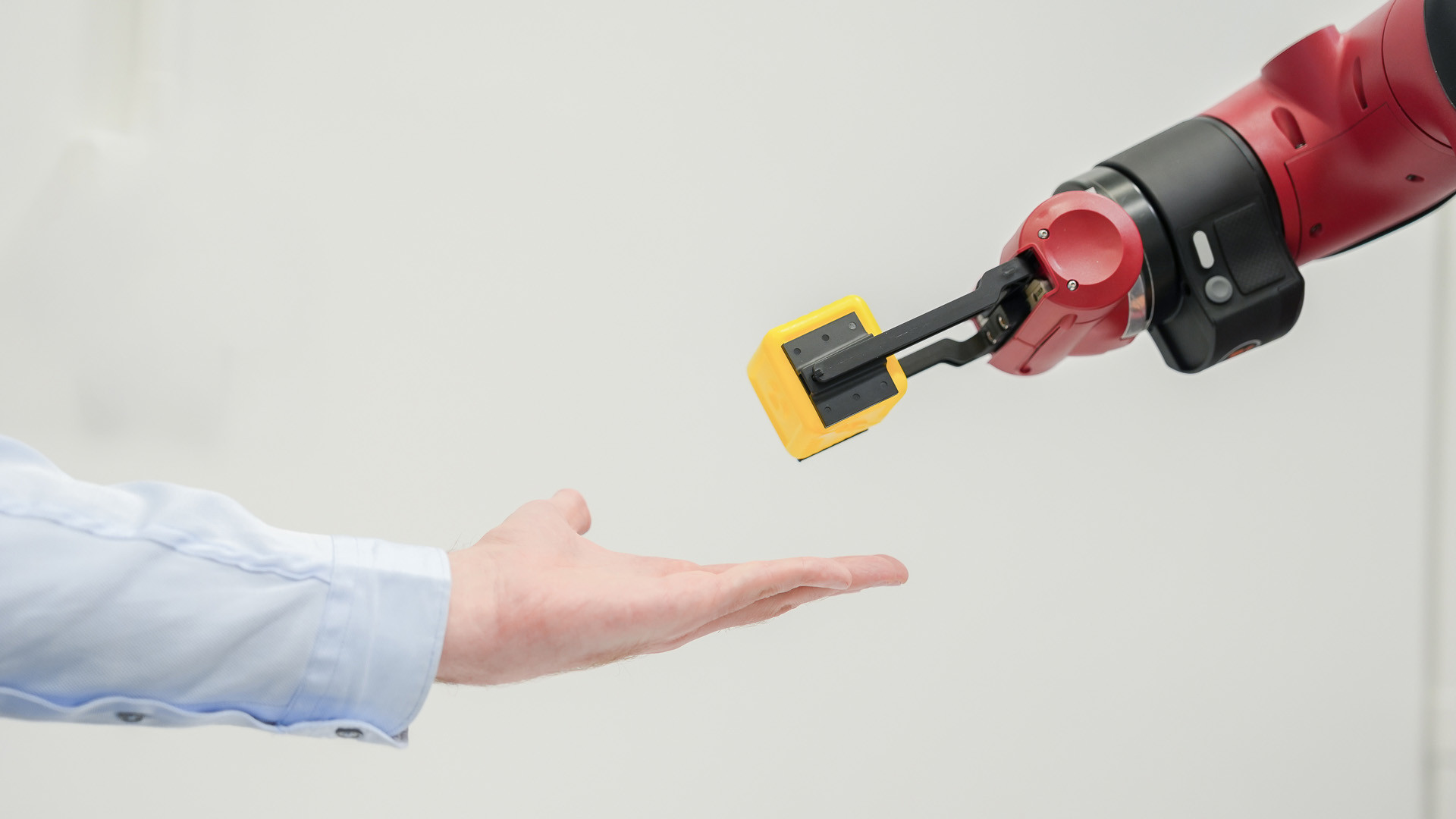
When ºÚÁÏÍø³Ô¹Ï±¬ÁÏ’s researchers wanted to program their new Ferranti Mark I computer in 1951, they had to think like the machine. This meant memorising a set of 32 symbols used to translate instructions into a form the machine could understand – symbols so different from language that they were like a secret code.
Today, instead of thinking about how we communicate with machines, scientists are trying to improve how machines communicate with us. How they might read our intentions, notice when there’s a change in our demeanour and earn our trust.
This isn’t just a question about technology, it’s also about psychology, ethics and what we need from the intelligent systems that increasingly share our workplaces, hospitals and homes.
The problem of trust
People build trust instinctively, often without noticing; it could be the way someone listens, remembers what matters to us, responds at the right moment, or handles a mistake. Now, researchers at ºÚÁÏÍø³Ô¹Ï±¬ÁÏ's are studying how these same dynamics might play out with machines.
They’ve found that our trust in robots often depends on two things: whether a robot can do what it claims, and whether it responds to situations – especially failures – in ways that feel recognisably human. A robot that completes a job but ignores typical social cues may be accurate, but it’s often not trusted as much as a robot that fails a task but acknowledges its mistakes in a human-like way.
also found that the voice a robot uses is important. During this exercise, people showed greater confidence in working with a machine when it spoke in an AI-generated voice designed to sound more human, even though when asked afterwards they claimed to have preferred a standard robotic version instead. It suggests that what people believe they want from robots and how they actually behave around them, are not always the same.
When the robot is watching you
However, trust doesn’t only run one way, and that’s why ºÚÁÏÍø³Ô¹Ï±¬ÁÏ researchers have been developing ‘Computational Trust’ – mathematical models which help robots assess the trustworthiness of the humans they work with.
, knowing how much a human partner’s contributions can be relied upon helps a robot to anticipate what its human partner is likely to do next, or where they might go wrong.2
This ties in with the ‘Theory of Mind’ concept, which describes a human ability to understand that other people have their own knowledge, intentions and goals that may differ from your own. Developing an artificial version of this – a robot that can genuinely read the room – is one of the most ambitious targets in the field.
Understanding another mind
To address this, ºÚÁÏÍø³Ô¹Ï±¬ÁÏ researchers are now exploring what happens when machines begin to develop a basic version of ‘Theory of Mind’. In , a research team gave pairs of autonomous robots different personalities and priorities. Some were designed to be more socially focused, while others were more playful. Each robot had its own needs and goals, but those needs were invisible to its partner. The challenge was learning to work together anyway.
To do this, the robots used their own experiences as a starting point for understanding each other. If a robot observed behaviour that looked familiar, it could begin to infer what its partner might be trying to achieve. Over time, those estimates were refined through interaction. The result was a machine capable of making decisions not solely for itself, but with another agent in mind.
The researchers found that cooperation emerged most successfully when at least one robot was willing to prioritise the needs of another. Simply giving the robot the ability to reason about another's mental state was not enough, what mattered was how it used that knowledge when deciding what to do next.
In human terms, it is the difference between understanding that somebody needs help and choosing to offer it.
Feeling heard
Progress in this field relies on developing a machine that can respond empathetically, not just correctly.
When , they chose to train it on facial expressions as well as text, giving it the ability to recognise emotional states and respond in ways that were more empathetic. When tested against responses from a leading commercial language model, Emma's replies were judged to be more humanlike and appropriate.
As AI becomes increasingly conversational and robots a more familiar presence in our lives, how well these kinds of interactions work for us matters in two ways: for the quality of the experience itself and for whether we can rely on these systems. Trust will be built through transparency, honesty and by machines that understand us well enough to know what we need.
In 1951, the human had to adapt to the machine but in 2026, we are building machines that might, at last, begin to adapt to us.
Ìý
Words: Ben Harwood and Enna Bartlett
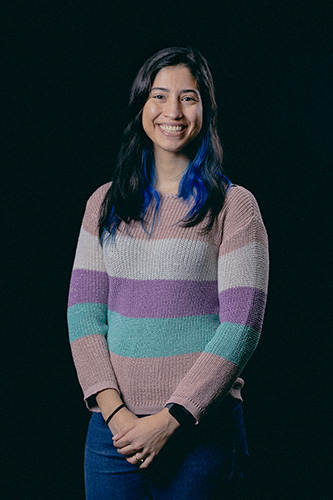
Meet the researcher
Letitia Berto is a Research Associate in the Cognitive Robotics Lab at ºÚÁÏÍø³Ô¹Ï±¬ÁÏ. Her work is inspired by how children learn and develop, and focuses on building robots that can think, learn, and adapt on their own. She aims to design autonomous intelligent systems that are curious, capable of making decisions, understanding others, and acting in trustworthy and ethical ways – ultimately enabling meaningful and effective collaboration between humans and robots in the real world.
If you would like to find out more about the research referenced in this article, you can find the full papers at the links below:
The Effect of Voice and Repair Strategy on Trust Formation and Repair in Human-Robot Interaction - DOI:
- Computational Trust in Robotics: Preliminary Investigations and Evidence -
A Theory of Mind Motivational Framework for Social Interaction with Autonomous Cognitive Robots - DOI:
Multimodal Dialogue for Empathetic Human-Robot Interaction - DOI: